
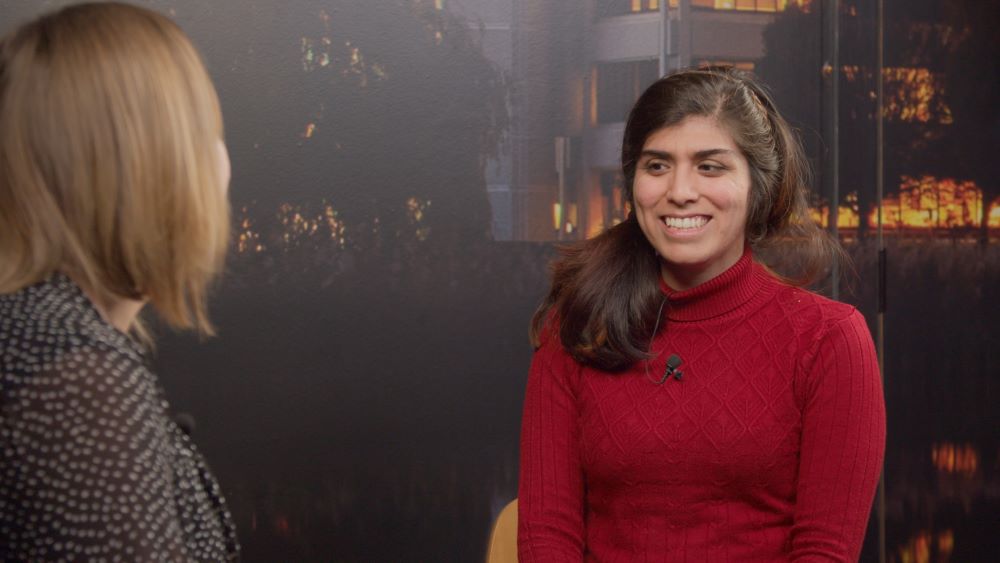
Jimena grew up in Peru and struggled with her mental health as a child before moving to the UK as a teenager, and later Portsmouth. She talks to Hayley Cook about the impact her mental health has had on her work and career, and the advice she would give to others struggling with their mental health.
So tell me a little bit about your mental health journey?
Well, if I start from the very beginning I guess I should start from explaining that in my home country in Peru, back when I grew up, mental health was seen more like possessions of the devil or still like early understanding about mental health, what it is about, why people get affected the way they do, and just anything to do with mental situations, it was still early knowing.
So, for me at the very beginning it was difficult to understand what was going on with me, why was I the way that I was, especially like if I felt any symptoms – like stomach ache – I didn’t understand at the time that it was anxiety being a little kid. It just felt like a stomach ache, and my parents saw that. Especially since I would say ‘I don’t feel too well to go to school’, and they would say ‘what is wrong’.
My stomach would give me moments of vomit and I would actually vomit, but they would say ‘you’re alright, it will pass, you just need to eat or drink a little less and you’ll be fine’ – but actually it was just me being anxious. Due to my learning difficulties, it made it hard to make friends as well as actually understanding people around me.
How old were you at the time?
I guess around seven or eight.
So did that continue through school and throughout your teenage years?
Yeah, that really impacted me quite a lot.
Curiously, as soon as I started getting more comfortable and less anxious, then we had to go back to the UK when I was 12, so I had to go back to square one of feeling anxious and conscious of things around me, and just navigate here being a teenager, and being different in so many ways. Again, I got really self conscious. That’s teenage life, as teenagers we end up picking on others, bullying starts. Sadly, that start also affect anxiety but because also what was going around with my family members, and being away from my country, I started being depressed as well.
And at what point did you actually reach out for help? How old were you then?
I think it was in 2013. I was 21 at the time.
What was it that made you think I need to get some support?
I realised that my emotions were getting the better of me, especially my anxiety, it just made me do things that I thought, I don’t even need to live life anymore.
Even through I kept telling myself what my parents think, what they’re going to feel, if I actually end my life, still most of the time I had that persistent feeling and I didn’t want to feel like that. Nor I wanted to carry that with them so they were also dealing with stuff so it’s bad enough that I put on top of that to them.
What did you do to reach out for support?
Well, first I went to my local surgery and I mentioned to them that I’ve been depressed, I think ever since a teenager. And I don’t know how to stop the anxiety and depression moments.
They asked me a few questions to check just to make sure that basically you are as anxious and depressed as you say you are, and as soon as I fill out the form, and they do the study, they said ‘okay yes you do need help’.
Did you then get medication? Or some therapy? Or a bit of both?
At the beginning, there was some help from therapy but unfortunately I wasn’t able to carry it out until I was actually back in my home country in 2019. That’s where actually before I went there I said to my mother, ‘I’m restarting from scratch being in the country, I’m more than ever an adult and that’s frightening for me. I need your support, I need your help, and more importantly I will be able to come to Peru and stay for a while and I will ask you to get me or contact a psychologist for me because I’m in desperate situation now. I’ve been trying to help myself alone, but it’s been hard to be consistent and I need your support in here as well.’
This was surprisingly the start of rebuilding our relationship which had been a bit fractured ever since we came back to the UK again, so for me to say that to her that was the start of wondering what was wrong with me. So we opened up, especially myself, about what happened during my teenage life, why I didn’t reach out to her – which I think is understandable growing up, your parents are busy and you have your own things and you don’t realise.
So, I had to fully expand of what I felt during those times, and I think fully open my heart which really helped me to get help. I didn’t realise how much I was holding back.
How has all of that affected your career? Your jobs? Has it been difficult?
Very, very difficult.
That actually set me back so much on my confidence, to actually pursue my career that I want to.
But at the same time, it also affected me in trying to look for a job. My anxiety, especially my social anxiety, made it difficult to actually not just socialise with people but also to be in interviews, I find it difficult to interact or answer a solid question, whatever they were actually requesting on that question.
What support did you reach out for in getting back into work?
I guess I thought to myself, now that I fully understand myself, I actually realised – I want to do something more, I want to keep my potential, I want to actually show that, and as well I want to be happy.
So, reaching out to the services, I was just getting to see what can I do, so I could grow in a career that I’d like to do in the future, as well as just understand how I can slowly work on it.
My ideal career would be writing and be either an author or a poet, or just anyway keep my poetry in use.
Therefore, I just thought, you know what, I can do that in moments of free time or any accessible time that I can when I’m not working, and work slowly on that project and hopefully get that in the future maybe, to get it published.
Have your seen your confidence increase as a result?
Yes, I guess it’s slowly building to that, especially with my writing. Eventually I realised ‘hey this is what I like doing’ so do whatever you can, and just keep studying yourself in how to improve, show it to people who you care about and know you. That helped me a lot with my confidence.
What advice would you give to someone who’s mental health is affecting their work, or getting work, what would you say?
If you feel like it’s something wrong with you emotionally, its important that you hear yourself – who better than yourself to know that you need the help?
It’s a great start to actually know yourself as well as how you can work on yourself to be the best person that you can veer be. Throughout learning yourself, how to help yourself and then later on walk into the path that you want to be.
Without that, you’ll be incredibly lost and from my experience, that’s not a great experience that you should have.
Sometimes you don’t understand how you’re feeling and it’s very important that if you just see a little spark there is something wrong, go and ask for help, because sometimes its not exactly something wrong about you that makes people see it’s wrong, it’s just that you’re difference. And it’s important to realise that difference on you and be able to work to understand it, as well as understanding the people around you. Otherwise you’re going to feel alone.
It sounds like you recognised that and you reached out for support, but it is a journey…
Yes, it takes a while actually to see it on yourself. At the beginning you think ‘you’re an alien’ and it takes a while to recognise how you’re different, you’re just different, it’s not that everybody’s different and you’re just the alien.
You just need to understand there’s so many similarities with other people, and some differences. That doesn’t make me an alien, it just makes me difference.
Related Items

Simon’s mental health journey - Lived Experience
My Mental Health - a blog from Simon Eddy about his mental health.
A conversation with Lacey Ingleby - Lived Experience
My Mental Health - a conversation with Lacey Ingleby about her mental health.
A conversation with Marta Federczyk - Lived Experience
My Mental Health - a conversation with Marta Federczyk about her mental health.
Get in touch
Our friendly team at the Portsmouth Mental Health Hub are here to help.
Get a call back
Enter your details and someone will call you back between 8am and 6pm, Monday to Friday.
If you or someone you know needs urgent mental health help, please call 111 – the NHS non-emergency number. It’s available 24 hours a day, 7 days a week and is free from any phone. They have specialist mental health nurses who can support adults and young people.
In a life-threatening emergency, always call 999.