
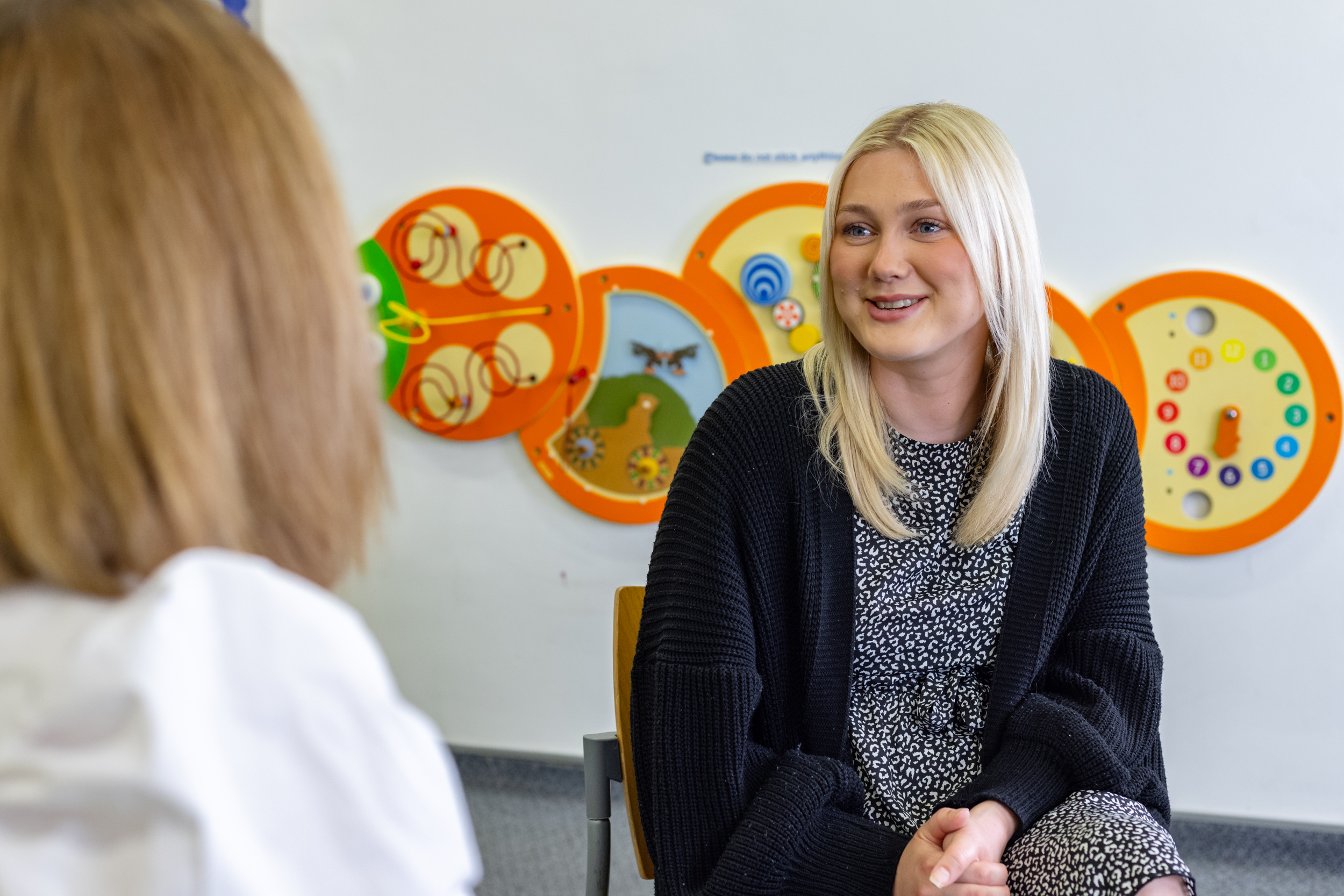
Lacey Ingleby is mum to 6-year-old Jenson. She talks to Hayley Cook about the emotions she felt as a first-time mum, being diagnosed with postnatal depression, and the advice she would give to other parents who might be struggling with their mental health.
So tell me about when you had your little one and how did you feel?
I was so excited when I first found out I was pregnant with him, I remember, I’ve always wanted to be a mum and I was scared, obviously, but I remember being so excited. That obviously continued throughout my pregnancy until I had him. It’s the best thing that’s ever happened to me.
And I imagine you felt a range of emotions and feelings as well?
I was a little bit scared at first, I was quite young when I had him, so I was a bit like ‘oh my god what am I going to do?’ I was very lucky circumstantially, I was in a good position to have him.
I was a bit nervous, so anxious, and all throughout my pregnancy thinking about what if things go wrong. It’s soon made up by all the things that go right, checking the app every week and seeing what size they are – this week he’s the size of a watermelon – it’s just amazing.
It is so exiting – it’s such an amazing thing. So then, when he was here, I guess it’s a whole range of different emotions again?
Absolutely. He was six weeks early so it was a little bit unexpected – that was a big shock, scrambling around for premature baby clothes, we weren’t prepared for that at all.
But once we were at home, we settled into a routine. I loved taking him on little trips to the park and doing lots of different things with him.
But then at the same time, there were the sad moments where he hadn’t slept and I wanted to do housework, or have a bit of ‘me’ time.
You sort of lose your identity in that phase a little bit. It slowly comes back, but for the first year or two years, there are just so any emotions.
And how did you cope with that?
I was quite lucky in that I had a very good family support network. A lot of my friends had children at the same age so we would go out, go to the stay and play groups together, or come round and have a cup of tea.
The part that I struggled with the most wasn’t necessarily the maternity leave, it was the returning back into work after.
I went back to work full-time and it was just a complete mess up of the whole routine that we’d established the whole time I was on maternity leave.
All of a sudden, I’d gone from seeing my son every day and spending every waking hour with him, and to go back to work full-time, I struggled a lot. With keeping on top of everything, the expectations that are there for you as a new parent and as a working mum, I don’t think you realise how much work goes into it.
Do you remember how you felt at that time? What sort of emotions and feelings were you having?
Stressed. Very, very stressed. And sad as well.
I’d spent all of this time with him to then suddenly go back to work. I was very lucky that my mum used to look after him whilst I was working. So, I’d drop him off at my mums, I’d work Monday to Friday from 8.15am-5pm, so then it was just breakfast time, dinnertime and then bedtime.
It just sort of ‘samey’ and I felt like I was missing out on so much and that made me feel really sad.
And was there a point where it almost got too much and how did you get out of that cycle?
I’d been back at work about six weeks and someone said ‘are you okay?’ and I just had an absolutely breakdown. I said ‘no I’m not okay, there’s just so much going on’.
They suggested I went to the doctors, so I went to the doctors and got put on some medication and got diagnosed with postnatal depression.
From that moment I was off work for about six weeks, trying to get back to myself again.
When I did return to work, I was phased back in. I did flexible working and had a day off in the week which gave me a bit more time with Jenson and a bit more time to get used to the new routine.
Had you recognised in yourself that you had postnatal depression? Would you have given it that label?
No, I don’t think so.
I’ve worked with children and families for a long time and I wouldn’t have thought to myself ‘you have postnatal depression’.
I didn’t know if it was normal or not. I didn’t know if those were feelings that everyone feels.
I just knew that I was struggling.
Ultimately, lots of mums and parents do have these sort of feelings and whether you label it, or don’t label it, the whole range of emotions and feelings that you have are completely valid and natural.
I completely agree. It’s so hard when you’re in your own mind and you don’t speak to anyone, there’s no one there to suggest any routes for support or anyone who might be able to help you.
Did you reach out for any other support?
I went to the doctors and I did access Talking Change as well, now known as Talking Therapies.
If you could offer advice to any new mums, new dads, new parents who are maybe feeling things they didn’t expect to feel, what would you say?
The main bit of advice that I would give is that it’s completely normal – it’s normal to feel like this.
You are not alone in your situation.
So many people feel exactly the same way but just don’t speak to anyone about it.
You let it all bottle up and then all of a sudden you get to a point where you can’t deal with it any more.
It does get easier. Looking back on it now I think ‘hang on a minute’. But, it’s so easy to see these things in hindsight.
When you’re out on the other side of it, you realise how much support is available.
When you’re in your bubble, you don’t necessarily see that.
And finally, one bit of advice for someone who might be struggling.
Speak to someone. Speak to someone about how you’re feeling.
Related Items
A conversation with Charley Nixon - Lived Experience
My Mental Health - a conversation with Charley Nixon about her mental health.

Joelene’s mental health story - Lived Experience
My mental health - a blog from Joelene about her mental health.

A conversation with Tina Chen - Lived Experience
My Mental Health - a conversation with Tina Chen about her mental health.
Get in touch
Our friendly team at the Portsmouth Mental Health Hub are here to help.
Get a call back
Enter your details and someone will call you back between 8am and 6pm, Monday to Friday.
If you or someone you know needs urgent mental health help, please call 111 – the NHS non-emergency number. It’s available 24 hours a day, 7 days a week and is free from any phone. They have specialist mental health nurses who can support adults and young people.
In a life-threatening emergency, always call 999.